
Entryway
Smart key tray: what it is and how it works
An entryway tray that reminds you what you need, a moment before you walk out the door.
 Written by Thomas David Short
Contents6 sections
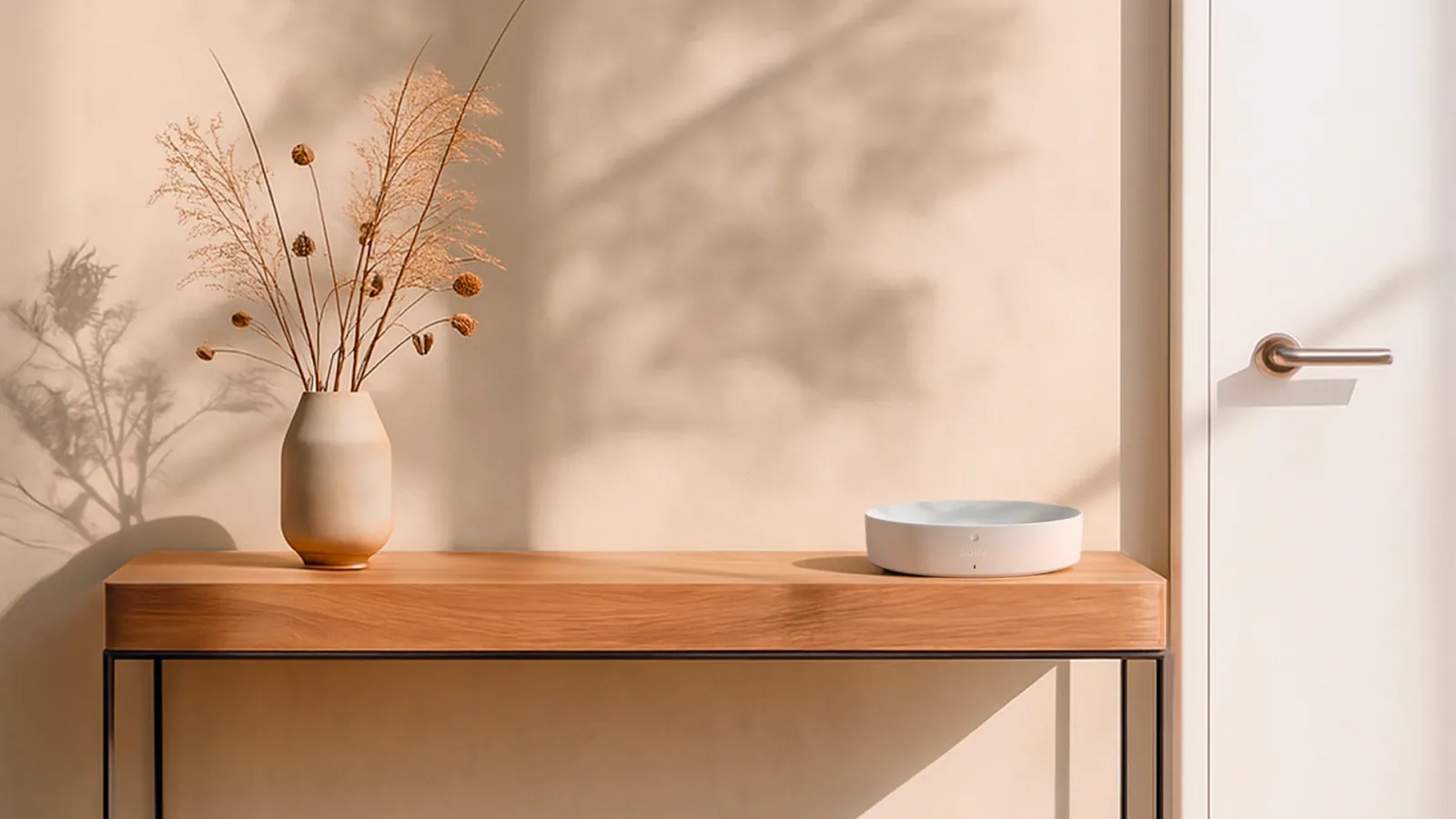
A smart key tray is an entryway tray that notices when you pick up or put down your keys and uses that moment to remind you of something. From the outside it looks like any other tray. Underneath, it's a digital butler. It knows you and your habits. It tells you what you need at the exact moment you need it, a beat before you walk out the door.
What a smart key tray is
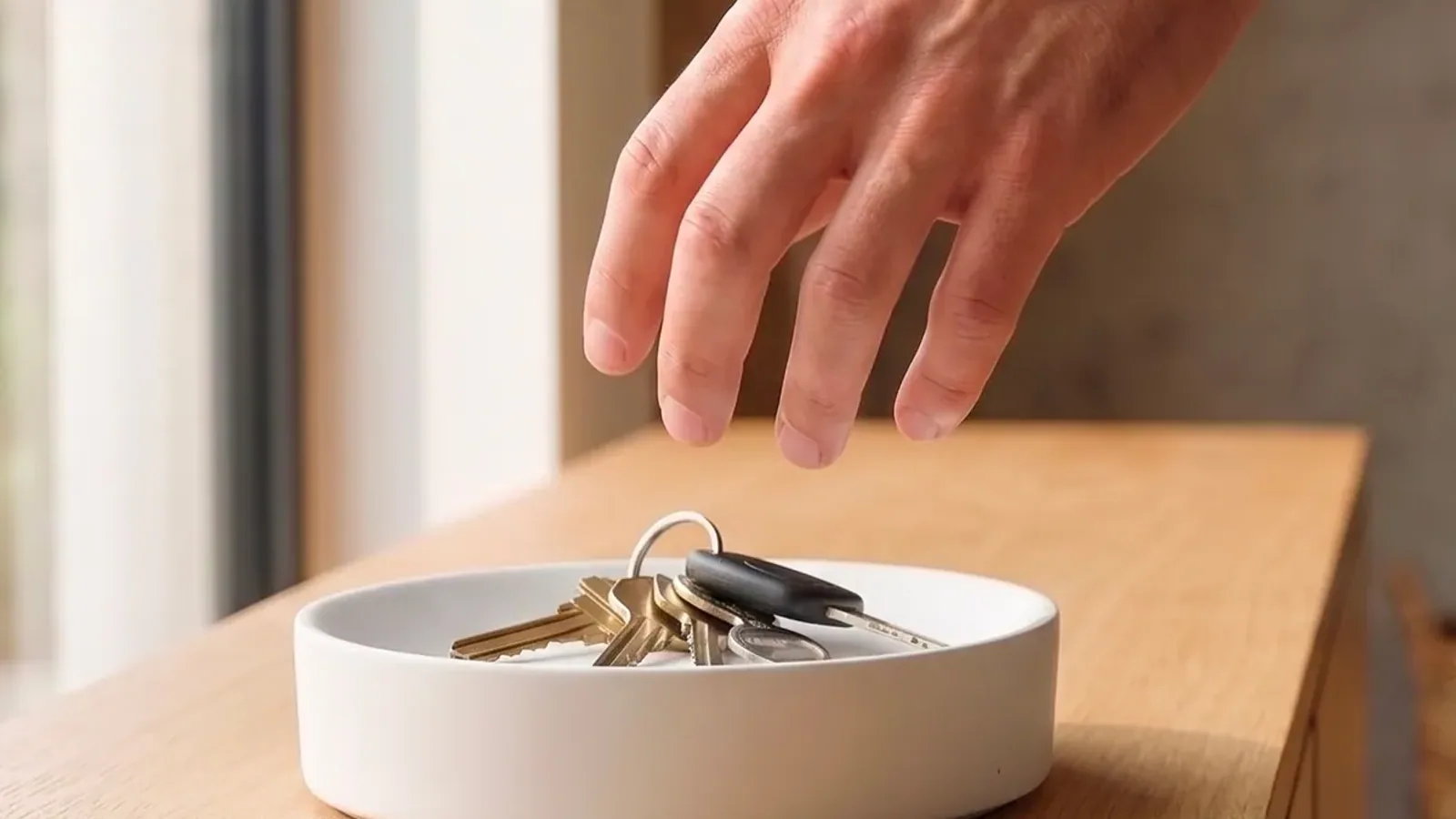
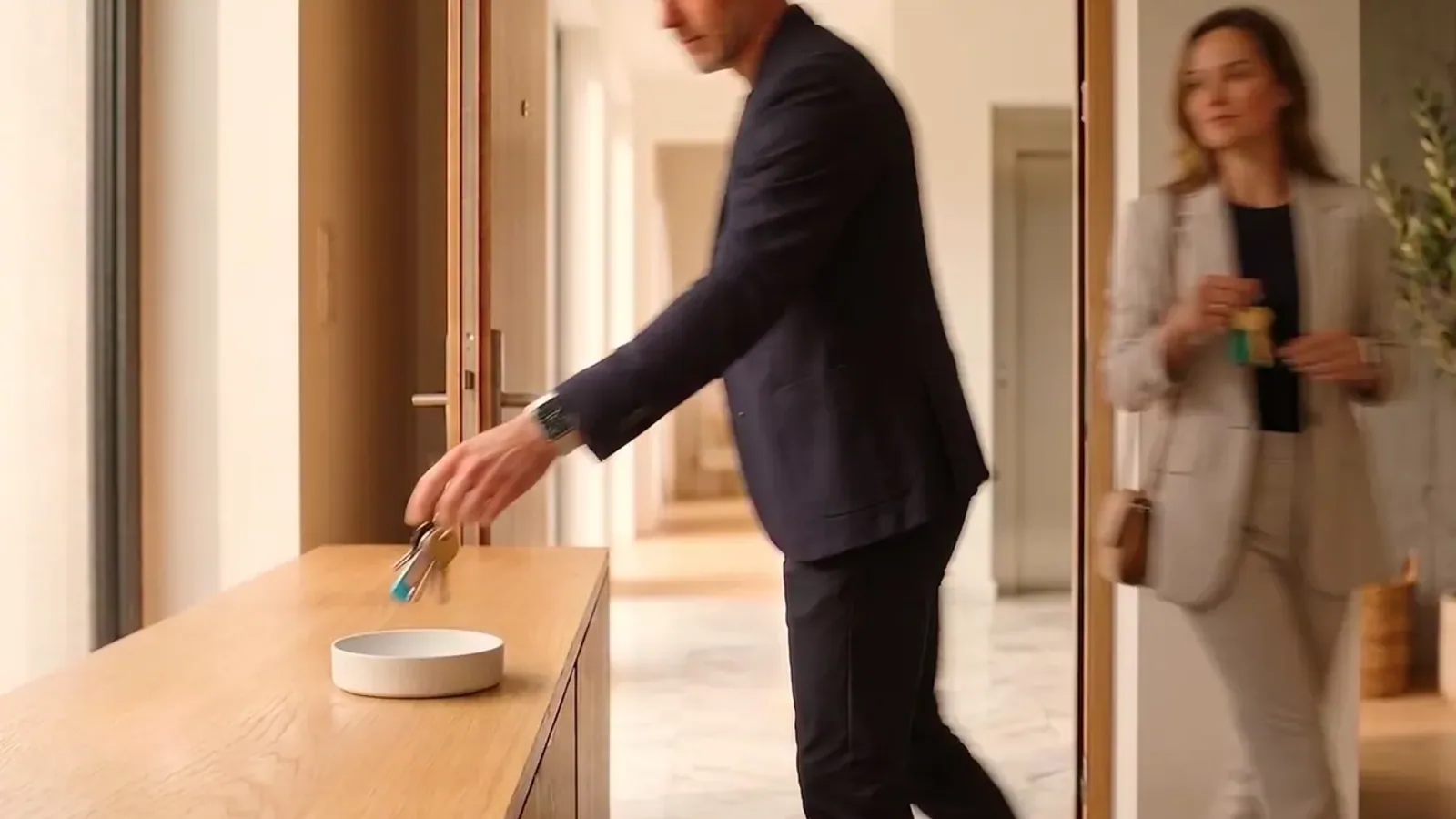
A smart key tray holds your keys like any tray would. It also recognizes the gesture of picking them up or putting them back, and that gesture sets something off: a spoken reminder, a phone notification, a message from someone you live with, a routine in your home.
The category is new. Nobody had thought of making an object this small intelligent, or of giving weight to the last thing you do before leaving and the first thing you do when you get back. Pick up the keys. Put them down. The shelf beside the door stops being a surface where things pile up and becomes the place where your home tells you one last thing on your way out.
How a smart key tray works
The whole thing rests on two gestures. Keys go up: you're leaving. Keys go down: you're home.
Dory also knows whose keys they are. Each set is linked to one person in the household, so everyone hears their own reminders and nobody else's. There's no button to press and nothing to say. The gesture is the one you already make.
What a smart key tray is for
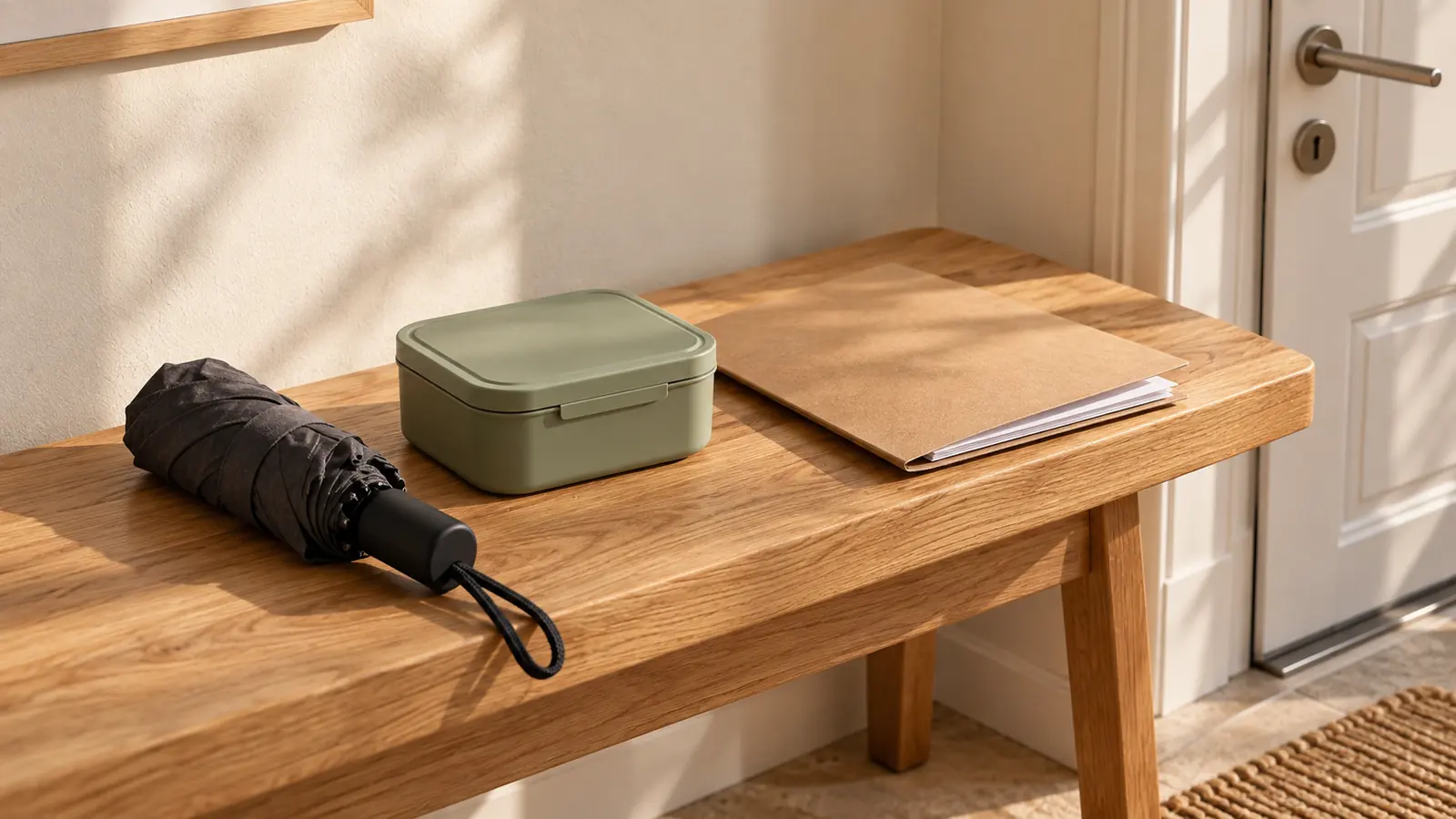
It catches the things that would otherwise stay behind. The lunch in the fridge, the umbrella, the folder you promised to drop off, the badge, the swim bag.
The simplest case is a personal reminder. You set it once. It plays when you pick up your keys, not at 7:30 because 7:30 seemed like a reasonable time.
Then there are messages between people in the same house. You leave a note for your kid in the evening. They get it the next morning, on their way out, not while you're typing it and they're in their room with headphones on.
Dory reads your calendar and the weather forecast. The context decides what you need today. The umbrella when rain is on the way, your ID on the morning of a flight.
The last use is about the house more than about you. The last person out turns off the lights and lowers the thermostat. The first one back turns on what's needed.
The homes where it does its best work
Homes where no two days look alike. Swim practice today, a birthday present tomorrow, paperwork to hand in the day after. A fixed spot for your keys doesn't know that. A message that changes every day does.
Homes with more than one person in them. Everyone has their own things to remember, and they hear them when they pick up their own keys. Whoever has been carrying everybody's schedule in their head can stop. We wrote about that in the mental load at home.
And homes where something should happen the moment someone leaves. Lights, thermostat, alarm. On why that moment matters, we wrote why leaving-home automations fire late.
How a smart key tray differs from a tracker
A tracker like AirTag or Tile clips onto anything, as long as you buy one for each thing. And once it's clipped on, it doesn't remind you to take the object. It tells you where it is, after you've left it behind.
Dory does the other half of the job. It tells you what you're about to forget while you're still at the door, and you don't have to attach anything to anything. One device for the whole house instead of one tracker per object. A heads-up before instead of a location after. The full comparison is in AirTag, Tile or a smart key tray.
Does a smart key tray work with a smart home
Dory speaks Matter and connects to Alexa, Google Home, Apple HomeKit and Home Assistant. You don't need a smart home to begin with: for reminders and messages, the tray and the app are enough.
The connection matters for one specific reason. Leaving-home automations today almost always rely on your phone's location, which arrives late and doesn't know who moved. A physical gesture has neither problem. That signal is exactly what the front door has been missing, and Dory exists to hand it to the home you already have.
Frequently Asked Questions
About three minutes. Download the app, place each person's keys on the tray once to create their profile, and set your first reminders. Nothing gets fixed to the wall: the tray sits on any flat surface near the door, plugged in.
No. For reminders and messages between the people you live with, the tray and its app are all it takes. A smart home platform only comes into play if you want the key gesture to turn off the lights, lower the thermostat or arm the alarm.
Keys are the default because almost everyone picks them up before leaving. Anyone who doesn't can link another small everyday object to their profile and use that as their personal signal instead.
No. It has no cameras and doesn't listen to the room: everything starts from the key gesture. If there's nothing to remember, it stays quiet. You can also set quiet hours when it won't speak and get reminders as phone notifications only.
If you leave without picking up your keys, you've almost certainly forgotten them. Dory notices the set is still there and sends an alert to your phone. When you come back and put the keys down, an evening reminder or a message someone left you can play.
Keep reading
 EntrywayAirTag, Tile or a smart key tray: what you actually needA tracker like AirTag or Tile helps you find your keys once they're already lost. A smart key tray tells you what you're about to forget while you're [...]
 Written by Lorenzo Gumiero
 EntrywayHow to organize your entrywayTo organize your entryway, start from the path rather than the furniture. Watch where your hand actually lands coming in and going out. Put things [...]Written by Thomas David Short
 ForgettingWhy we always forget our keysYou forget your keys because by the time you reach the door, your head has already arrived where you're going. Your body is still at home. Your [...]Written by Lorenzo Gumiero