
Entryway
How to organize your entryway
What it actually needs, what it doesn't, and why almost every drop zone stops working after two weeks.
 Written by Thomas David Short
Contents8 sections
To organize your entryway, start from the path rather than the furniture. Watch where your hand actually lands coming in and going out. Put things there. A well-organized entryway has few elements, all of them on the line you already walk.
How to organize your entryway
Your entryway is the last point of contact before you leave and the first one when you get back. Organize it for those two moments, not for how it looks when it's empty.
The method that works best is watching for a week without changing anything. Where the keys end up. Where you sit for your shoes. Where you drop your bag when you open the door with your hands full. Where the mail piles up.
Then put the function where the gesture already happens, instead of asking the gesture to move to wherever you put the furniture. Don Norman calls this natural mapping, in The Design of Everyday Things (2013): a well-designed object is understood at once because its logic matches the logic of the space.
What an entryway actually needs
Four things, and rarely more.
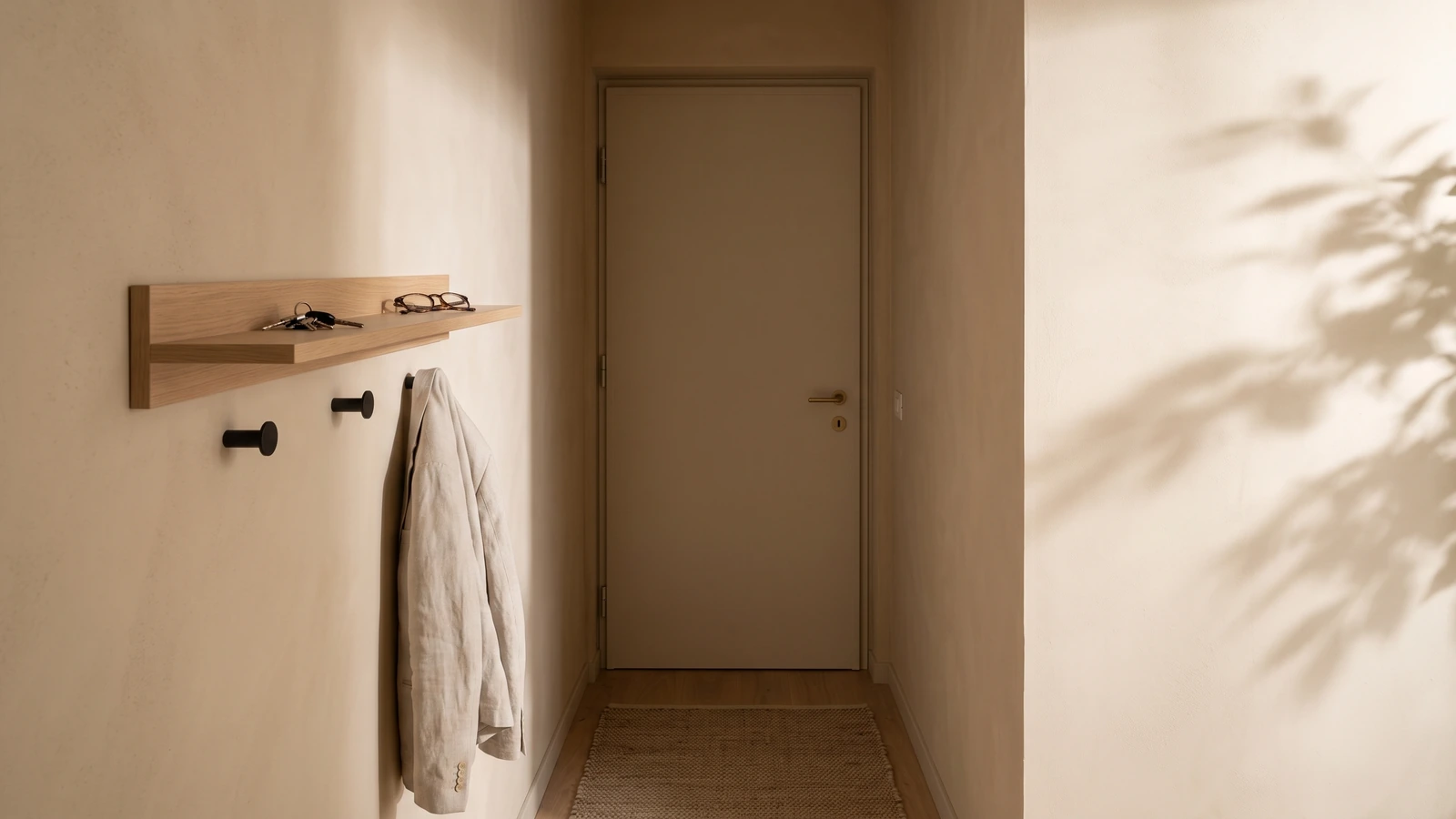
A surface: a shelf, a ledge, a narrow console. Keys, phone and the mail you just picked up land there.
A hook for a coat, a bag and an umbrella. Wall hooks cost little and take no floor at all.
A place for shoes, even just a rug that marks the edge.
A light you can turn on without hunting for it. Coming home in the dark, feeling for the switch with your hands full, is the most common entryway frustration there is.
The rest is optional. The mirror, if you actually check it before leaving. The stool, if you actually sit. The mail basket, only if you empty it.
How to organize a small entryway
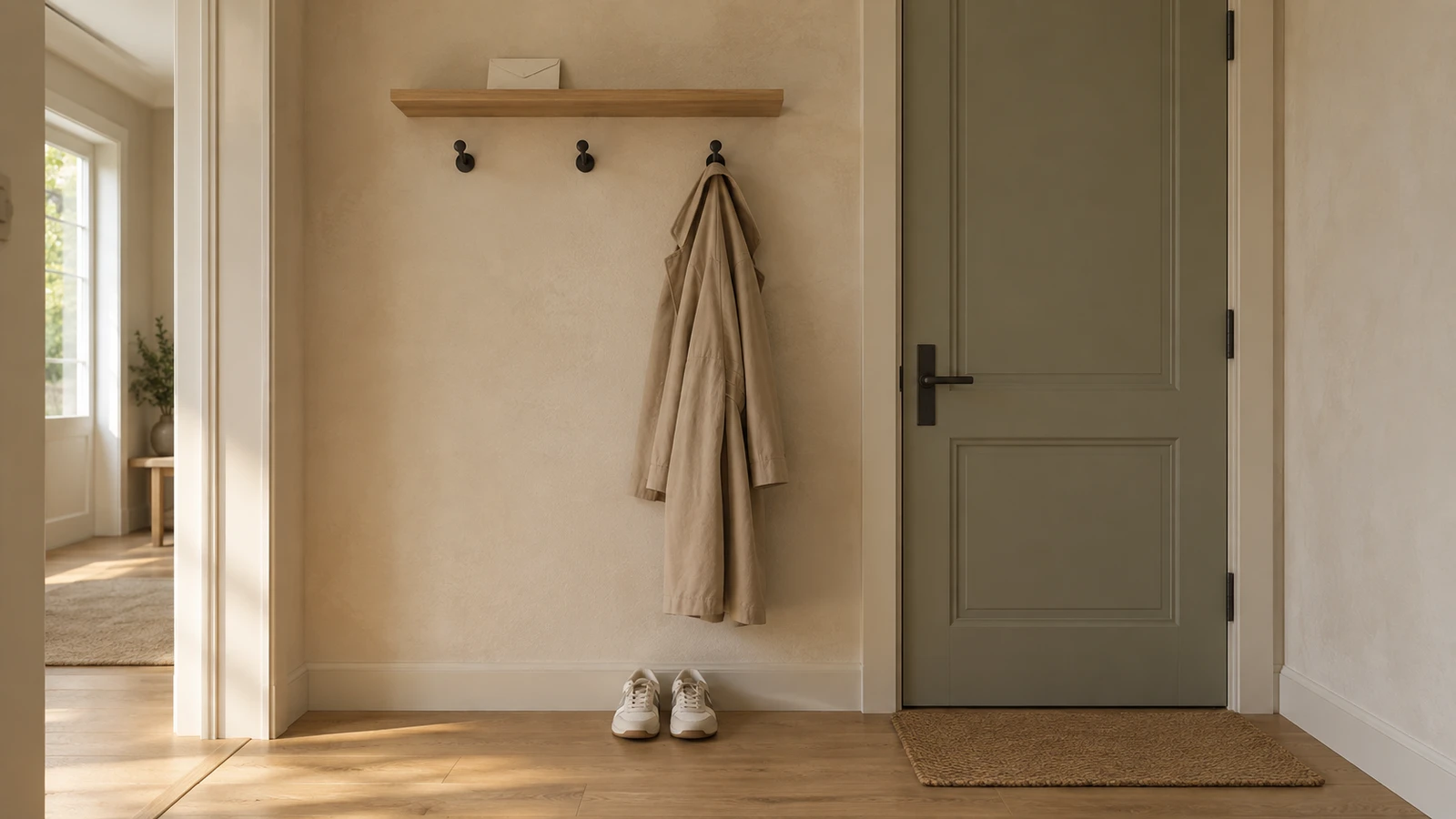
Use the walls and leave the floor clear.
Go vertical. A narrow shelf at a comfortable height beats a deep cabinet that eats walking room. Six inches of depth is enough for keys, phone and mail.
Use the space behind the door, the most underused in the house. Hooks on the back of it, or on the wall the door covers when it's open.
Cut what's on display. In a narrow hallway, mess reads three times louder. Two hooks that stay free do more than six that stay full.
One thing not to do: the deep cabinet added "because we need storage." In a narrow entryway it becomes an archive and narrows the path. It makes both problems worse at once.
Where to put your keys
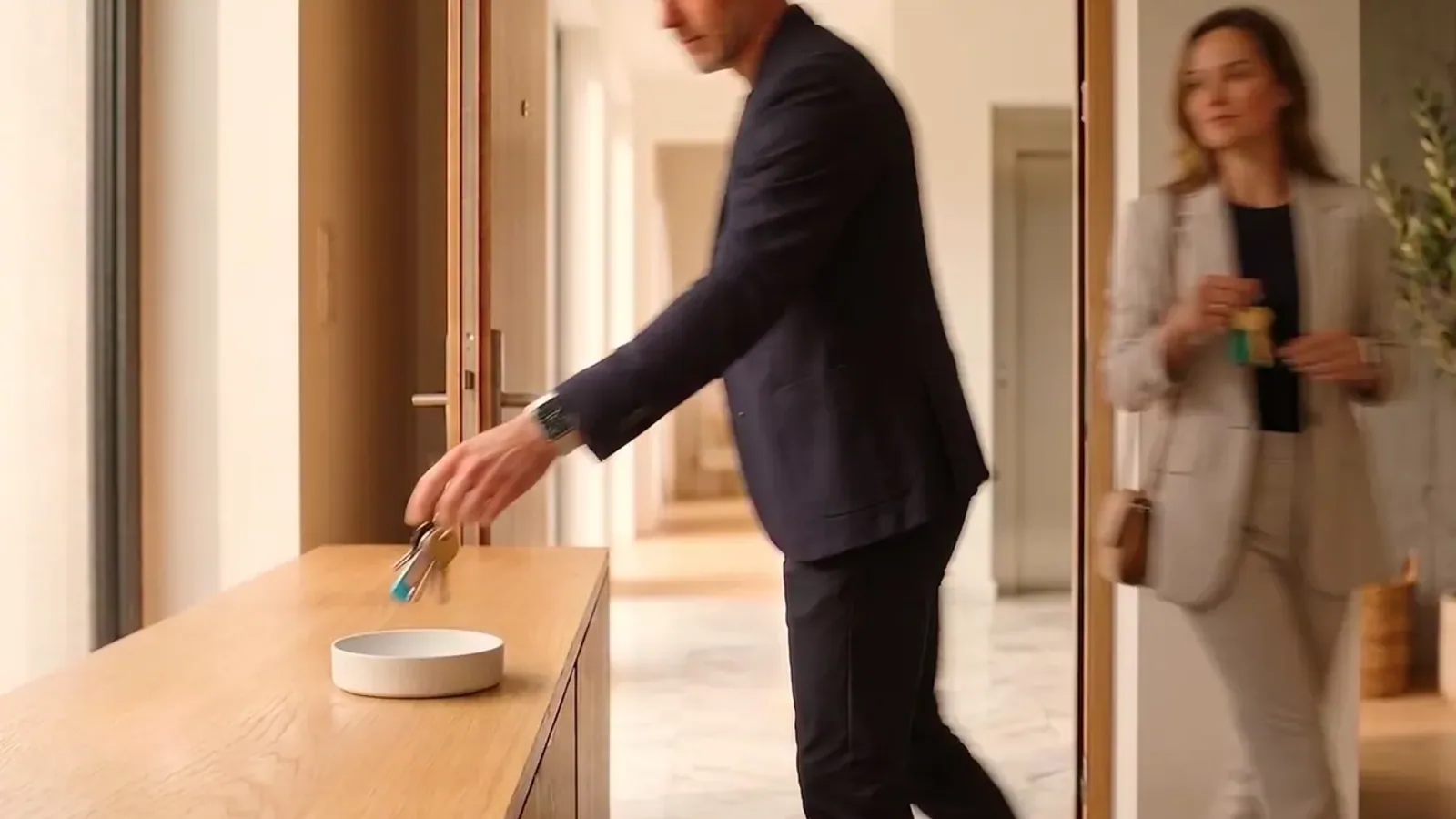
Exactly where your hand already is when you open the door, not where it would be tidy to put them.
If the key spot costs two extra steps, those two steps get skipped on the day you're in a hurry. And that's precisely the day the system was supposed to work.
Three reasonable options. A bowl or a tray on the shelf, at hand height. A hook next to the door frame. A dedicated pocket inside the bag you always carry.
Whichever you pick, there has to be one. Two places for keys is the same as no place.
Why the drop zone stops working after two weeks
It fails in the same four ways almost every time.
It becomes an archive. It starts as a filter and fills with old mail, receipts and cables. A full filter doesn't filter.
It disappears from view, within a week or two. It's the same mechanism that turns the note on your door into wallpaper.
Someone else moves it, usually while tidying. The fixed spot ends up in a drawer and nobody mentions it.
It stays passive, which is the worst way to fail. The object is right there, you walk past it and don't see it, because your head has already arrived where you're going.
The first three you can do something about. Empty it once a week, always the same day. Shift it a few inches now and then, because novelty beats habit. Keep it small. The fourth, no. For that you need something that speaks.
How to organize an entryway shared by several people
One person builds the system and that same person maintains it.
The fix isn't sharing everything. It's giving each person their own space, however tiny. One hook each, one bowl each. A space with a single owner gets maintained. A shared space becomes the place where everything without a home ends up.
The same goes for messages. A shared note on the door gets updated by the person who already remembers things, so it does nothing for the person who forgets. We wrote about that in the mental load at home.
How to organize an entryway with kids
Anything they have to do on their own has to be at their height. Low hooks for coat and backpack. A basket on the floor for shoes, no lid, because a lid is one extra step no child takes.
For reminders, the same rule as the rest of the house. A change of clothes inside the open backpack works better than a list on the kitchen wall. The kid meets the backpack. The kid never meets the list.
What to add only at the end
Once the path, the surface, the hooks and the light are sorted, two additions are worth it.
A tracker on your keys, if the problem is losing them inside the house. We covered that in AirTag, Tile or a smart key tray.
A device that speaks, if the problem is walking out without something. It's the only way to get a signal that changes daily and knows who it's talking to. The category is explained in the guide to smart key trays. The one we're building is called Dory.
Neither replaces the basics. A device dropped into a chaotic entryway inherits the chaos.
Frequently Asked Questions
A narrow shelf at hand height, two or three wall hooks, a rug marking the shoe zone and a light that's easy to reach. Skip deep furniture: it steals walking room and turns into an archive.
Where your hand already is when you open the door, so on a shelf or a hook beside the frame. What matters most is that there's exactly one spot and that it costs no extra steps.
Keep the drop zone small and empty it on the same day every week. A surface that can't hold much won't become an archive. A fixed routine saves you from deciding every time.
About six inches is enough for keys, phone, mail and glasses. Past ten inches, in a narrow hallway, a shelf starts taking walking room without adding anything useful.
Only if you actually use it before leaving. In a narrow hallway it also does something practical, since the reflection widens how the space reads. If you never stop to look, it's one more thing to clean.
Keep reading
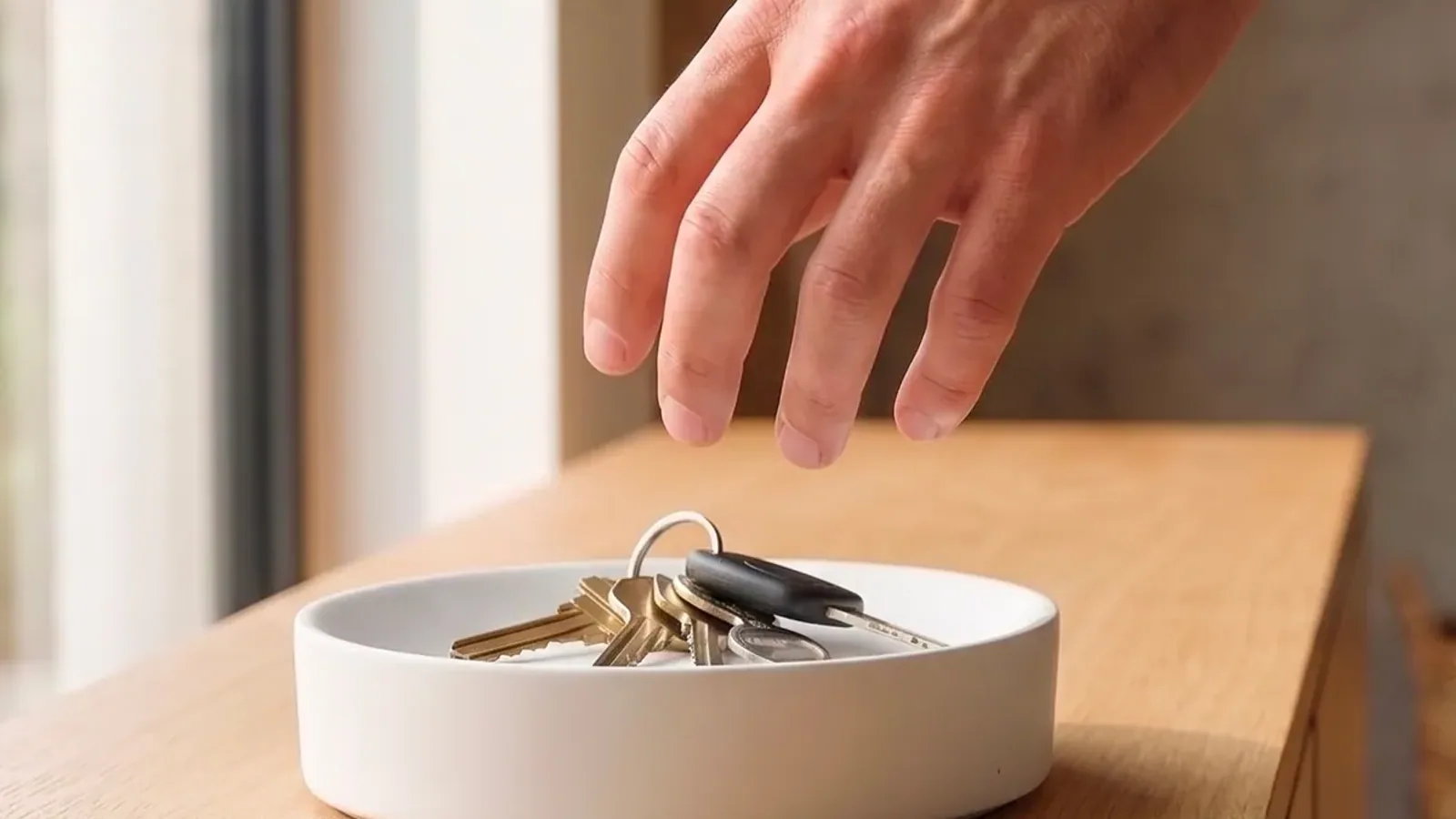 EntrywayAirTag, Tile or a smart key tray: what you actually needA tracker like AirTag or Tile helps you find your keys once they're already lost. A smart key tray tells you what you're about to forget while you're [...]
 Written by Lorenzo Gumiero
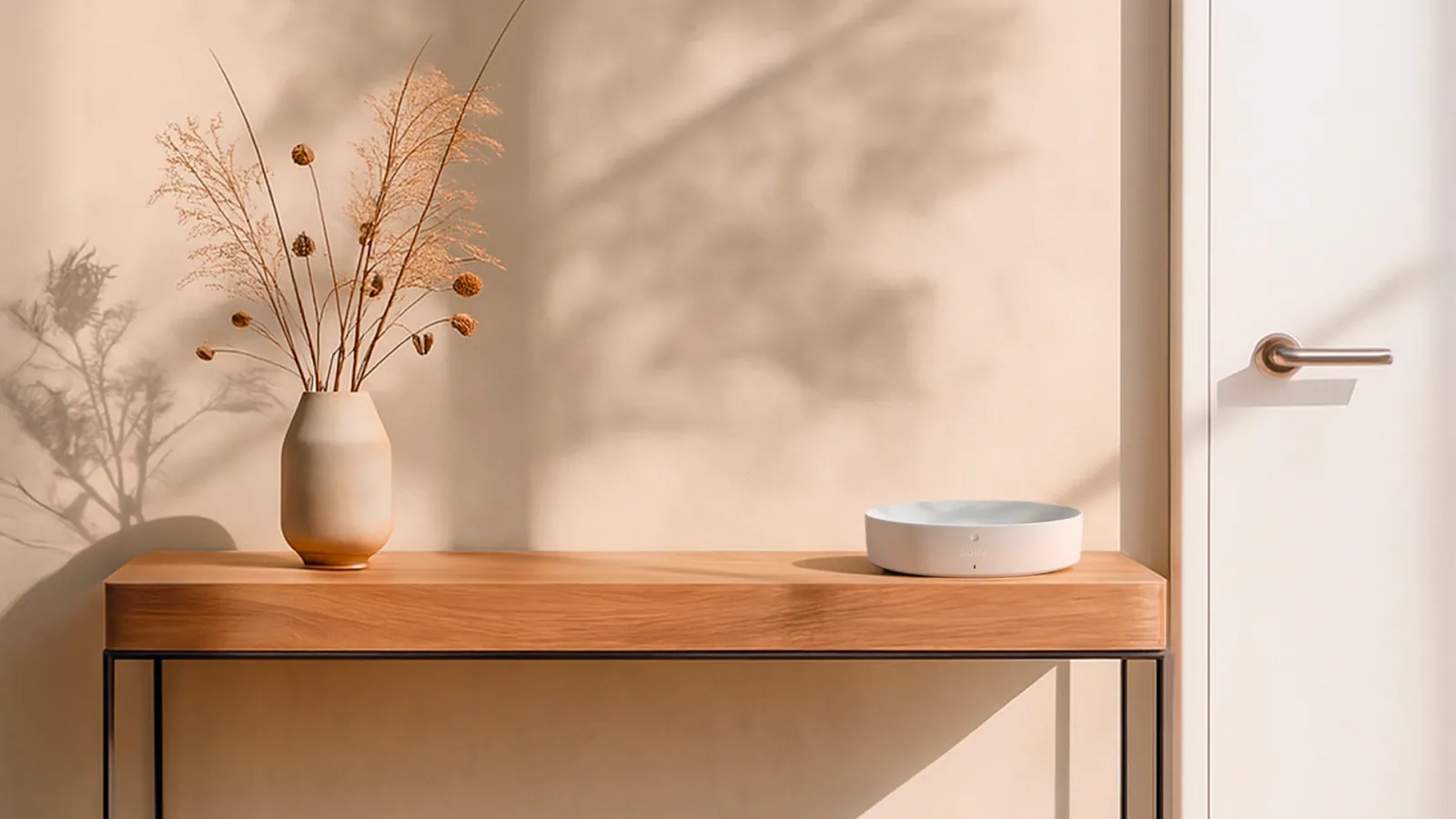 EntrywaySmart key tray: what it is and how it worksA smart key tray is an entryway tray that notices when you pick up or put down your keys and uses that moment to remind you of something. From the [...]Written by Thomas David Short
 ForgettingWhy we always forget our keysYou forget your keys because by the time you reach the door, your head has already arrived where you're going. Your body is still at home. Your [...]Written by Lorenzo Gumiero