
Entryway
AirTag, Tile or a smart key tray: what you actually need
A tracker tells you where your keys are after you've lost them. A smart key tray reminds you what to take before you leave.
 Written by Lorenzo Gumiero
Contents7 sections
A tracker like AirTag or Tile helps you find your keys once they're already lost. A smart key tray tells you what you're about to forget while you're still at the door. The first acts after, the second before. Which one you need depends on which mistake you make more often.
AirTag, Tile or a smart key tray: what you actually need
One question settles it. Is your problem not finding your keys, or walking out without something?
If you're opening drawers, checking the pockets of three jackets and coming up empty, you need a tracker. If your keys are exactly where they belong and you're on the street without your lunch, your umbrella or your paperwork, a tracker won't help.
| Tracker (AirTag, Tile) | Smart key tray | |
|---|---|---|
| When it steps in | after the object is already far away | while you're still inside |
| Question it answers | where are my keys | what am I about to leave behind |
| Knows who you are | no | yes |
| Covers objects without a tracker | no | yes, because the alert is a message |
| Covers things that aren't objects | no | yes, like a commitment or an errand |
| Connects to a smart home | no | yes |
What an AirTag does and doesn't do
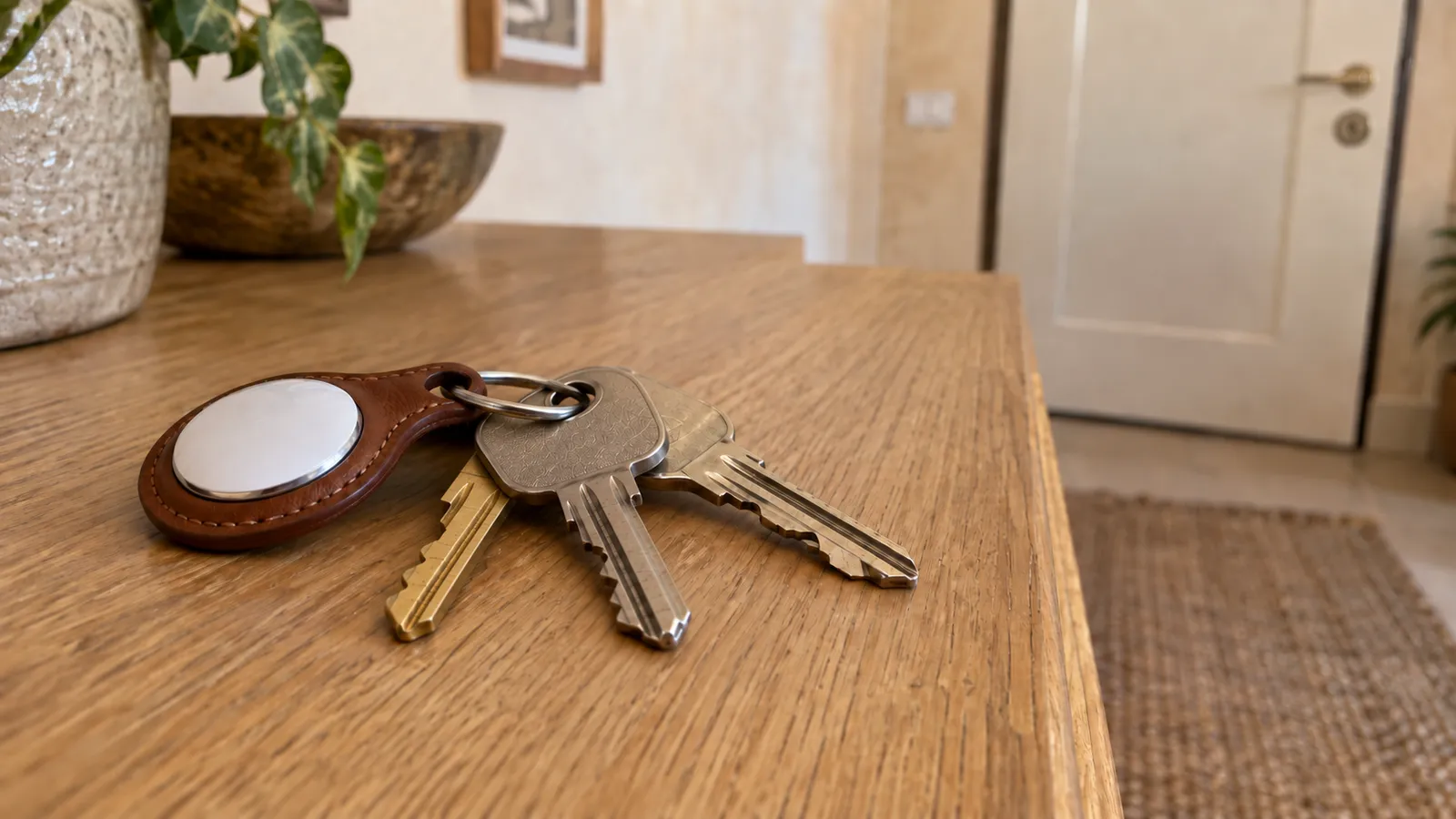
An AirTag is a Bluetooth tracker you attach to your keys. It finds them through Apple's network of devices.
It does three things well. It guides you to the object when it's close. It tells you where it was last seen when it's far. It alerts you when you've walked away and left it behind.
That third feature is the most misunderstood in the category. It fires once the separation has already happened, so after you've left. It's for recovery, not prevention.
Two limits to plan for. AirTag lives in the Apple ecosystem, so Android users are out. And it has no smart home connection, so it can't start any routine.
What a Tile does and doesn't do
Tile is a Bluetooth tracker that works on both iPhone and Android. It's AirTag's main competitor.
The most interesting difference is in the separation alerts, which in the paid tier flag when you've moved away from the object. The maker cites a radius of about a hundred meters. The measurements we've gathered put the real-world alert somewhere between five and ten minutes.
Five minutes is a long time. By the time the alert lands you're on the subway or in the car. Going back takes a decision, not a step.
Everything else is the same limit as AirTag. A tracker covers the object it's attached to and nothing more. The lunch in the fridge, the badge on the desk and the swim bag don't have trackers. They never will.
What a smart key tray does
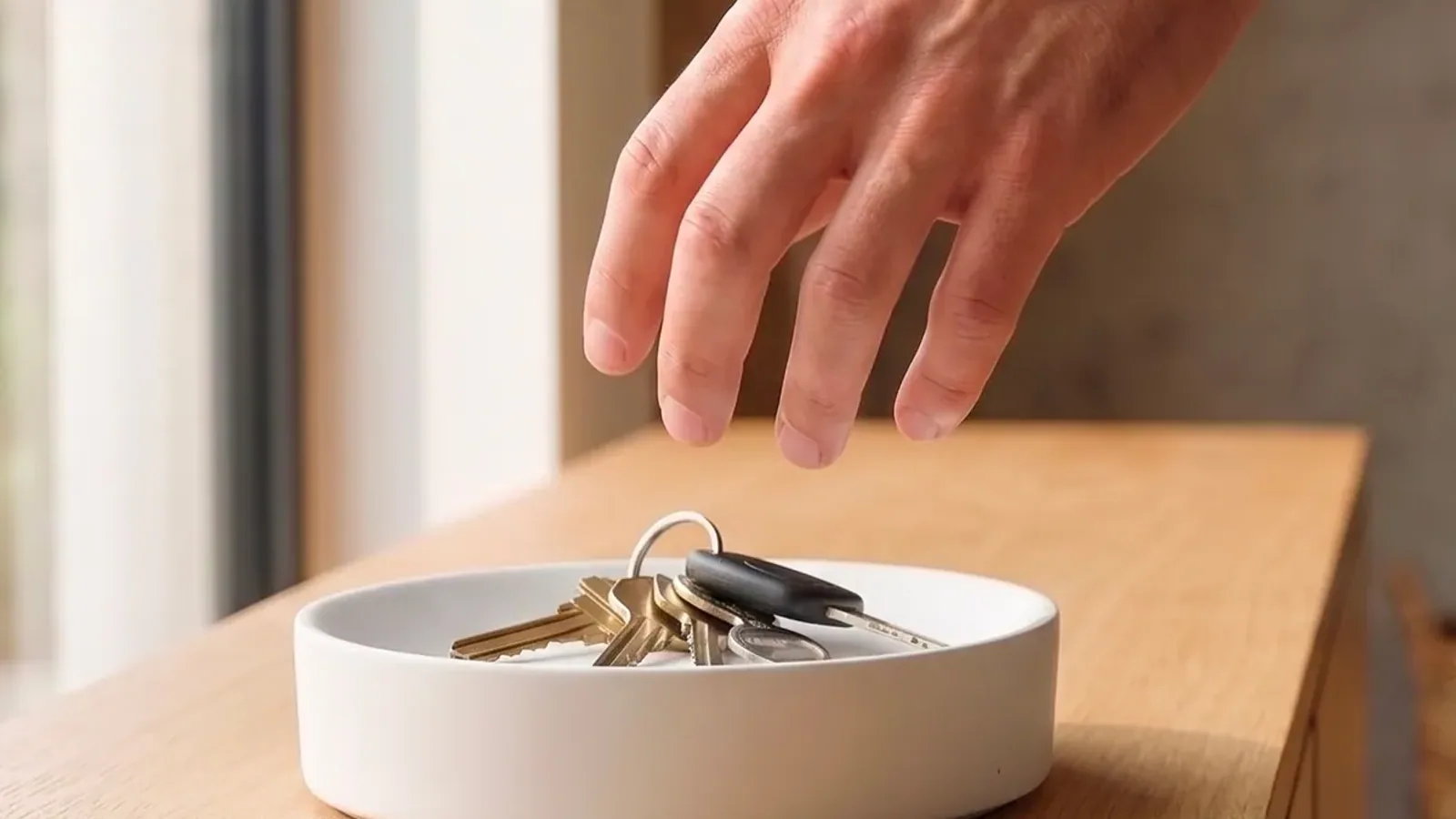
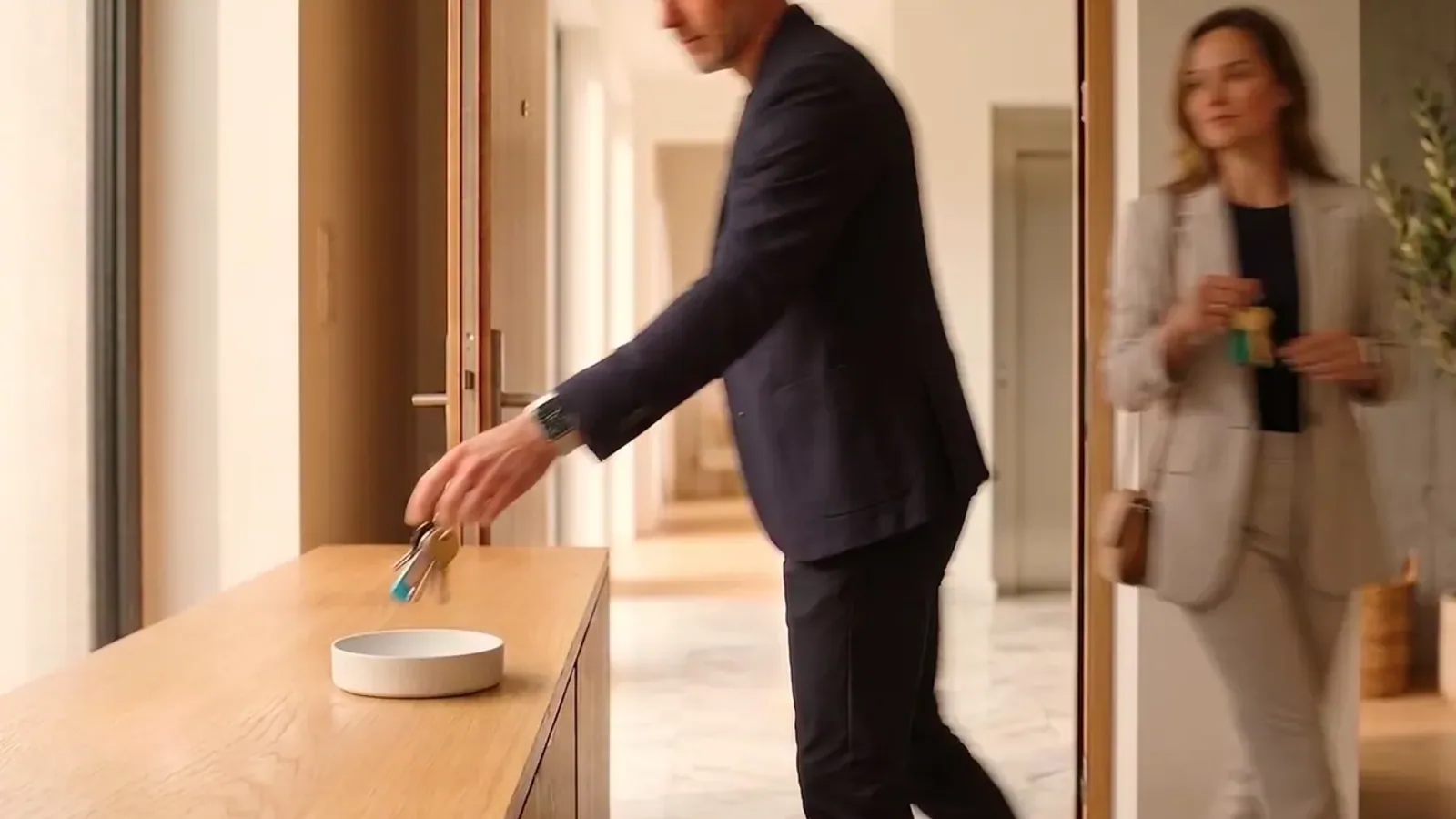
A smart key tray recognizes the moment you pick up or put down your keys and uses it to tell you something.
The point isn't the object. It's the moment. Picking up your keys means you're leaving. You're still inside, so turning around costs three steps instead of twenty minutes.
From there you can get a reminder you set yourself, a message from someone you live with, a suggestion pulled from your calendar or the forecast, or the start of a home routine. Dory also knows whose keys they are, so everyone hears their own things. The whole category is explained in the guide to smart key trays.
When a tracker is the right call
When you lose things inside the house. There a tracker beats every other solution.
When you lose them outside. The wallet left at a café, the bag left on a train. Here the finding network makes the difference, because thousands of phones act as the antenna.
When you travel often. A tracker in your luggage is probably the most useful thing the whole category does.
When a smart key tray is the right call
When you forget things a tracker can't cover. The lunch, the umbrella, the paperwork, the gym bag, the folder you promised to drop off. That isn't a memory problem: you had the information. What was missing was a cue at the moment you could still act. We wrote about it in why we always forget our keys.
When your days look different from each other. A fixed spot doesn't know today is swim practice and tomorrow is a birthday gift. A message that changes daily does.
When more than one person lives there. Everyone hears their own things and can leave a message for the others.
When you want something to start the moment you leave: lights, thermostat, alarm. A tracker does none of that.
Can you use both
Yes. They cover opposite moments of the same day.
A tracker clips onto anything, as long as you buy one for each thing. And when the object gets left behind, the tracker tells you where it is. It never told you to take it.
Dory does the other half of the job. One device for the whole house, with nothing to attach. It reminds you what you're about to forget while your hand is still on the door handle, which is the only moment turning around costs nothing.
Frequently Asked Questions
The left-behind alert fires after you've walked away, so once you're already out. It tells you the keys stayed home. It doesn't tell you while you could still go back and grab them.
It depends on the problem. For finding lost keys there are other Bluetooth trackers, some of which work on both iPhone and Android. For not walking out without something, you need a different category: a device that acts at the door, before you leave.
AirTag is tied to Apple's ecosystem. Tile works on both. Other makers stay inside their own ecosystem, so check that a tracker works with the phone you actually carry before buying one.
The documentation cites a separation radius of about a hundred meters. The measurements we've gathered put the real-world alert somewhere between five and ten minutes under normal use.
You do if you often lose your keys inside or outside the house, because that's a job Dory doesn't do. If you always find your keys and the problem is walking out without other things, a tracker adds little.
Keep reading
 EntrywayHow to organize your entrywayTo organize your entryway, start from the path rather than the furniture. Watch where your hand actually lands coming in and going out. Put things [...]
 Written by Thomas David Short
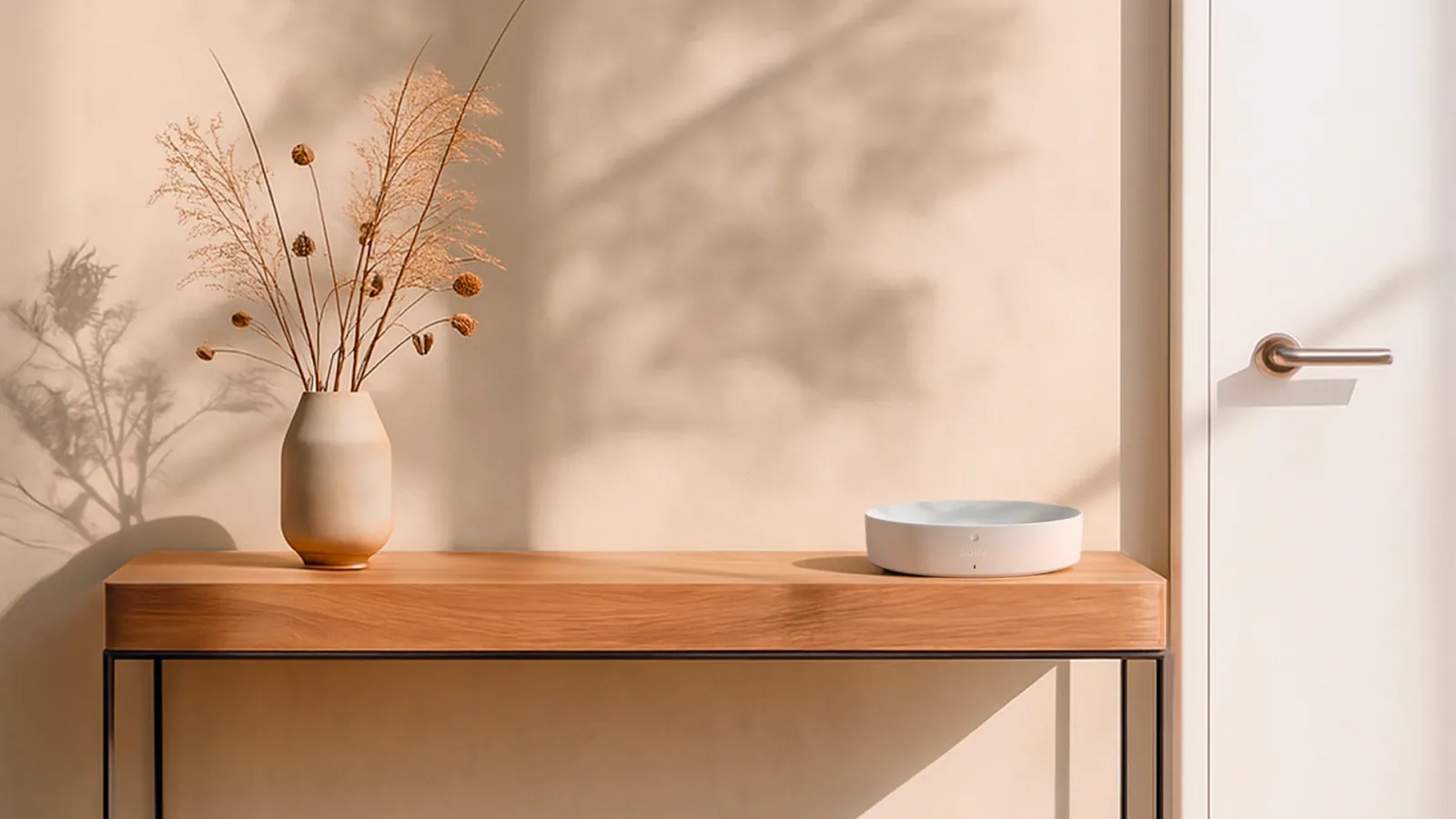 EntrywaySmart key tray: what it is and how it worksA smart key tray is an entryway tray that notices when you pick up or put down your keys and uses that moment to remind you of something. From the [...]Written by Thomas David Short
 ForgettingWhy we always forget our keysYou forget your keys because by the time you reach the door, your head has already arrived where you're going. Your body is still at home. Your [...]Written by Lorenzo Gumiero