
Smart home
What Matter is and why it changes the smart home
A shared language between devices from different brands. And the three things it still doesn't fix.
 Written by Federico Zarantonello
Contents7 sections
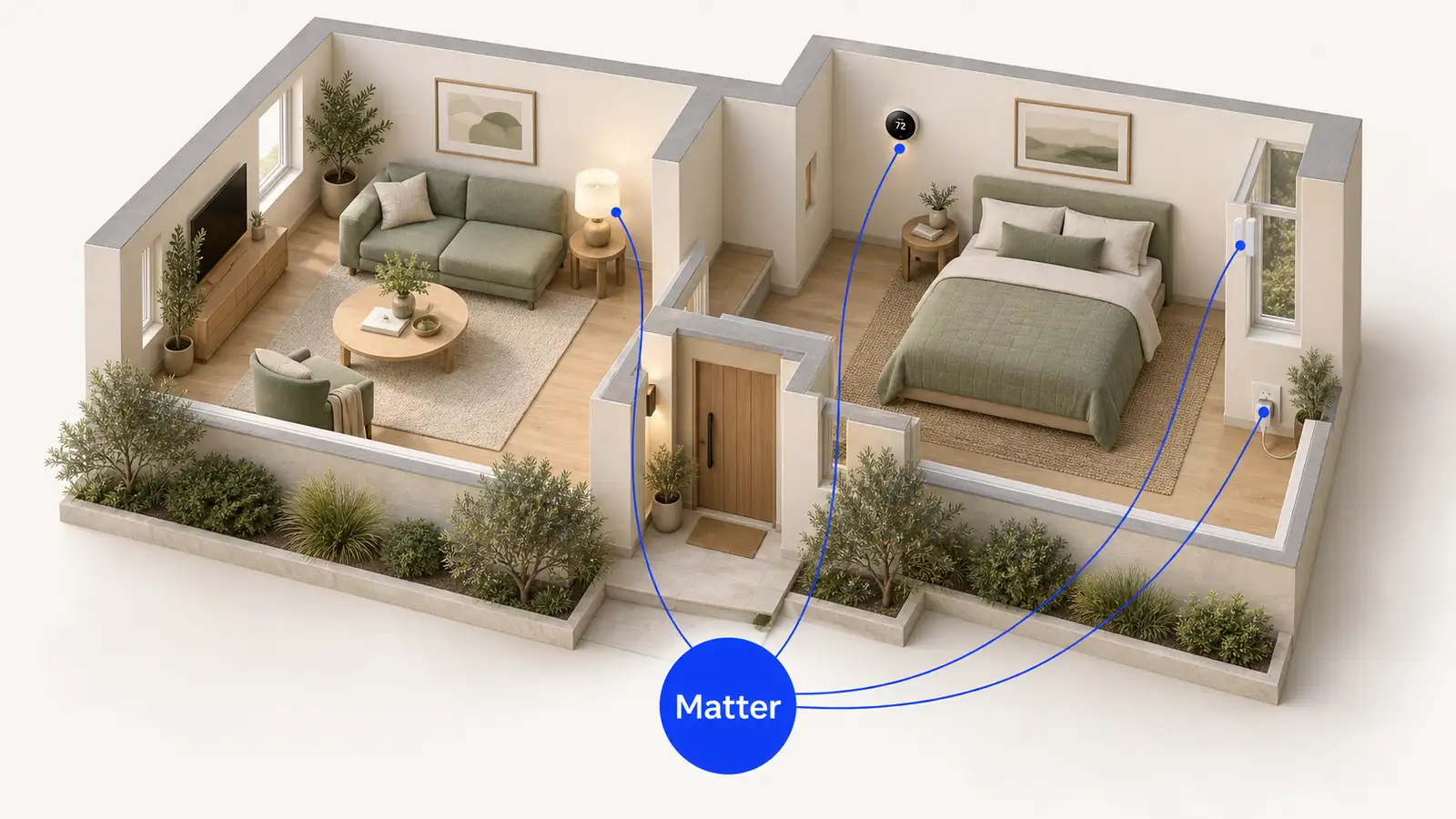
Matter is a standard that lets smart devices from different brands talk to each other without a separate app for each one. A Matter-certified device works with the major home platforms at the same time. You're no longer forced to pick an ecosystem and stay inside it.
What Matter is
Matter is a connectivity standard for the smart home, built on IP, developed by the Connectivity Standards Alliance together with the major companies in the industry.
Its purpose is one thing: reducing fragmentation. Before Matter every manufacturer spoke its own language. Combining a bulb from one brand, a thermostat from another and a sensor from a third meant three apps, three accounts and automations that stopped at the edge of each ecosystem.
Matter defines a shared vocabulary. A certified bulb says "I'm a bulb, I can turn on, turn off and dim" in a way every platform understands without a purpose-written integration.
How Matter works
Like a shared language sitting on top of your home network. Certified devices are added once and can be controlled from several platforms at the same time.
The most important practical consequence is called multi-fabric. The same device can live in more than one ecosystem at once. In a home where one person uses an iPhone and another uses Android, nobody has to be right anymore.
The second is setup. Adding a certified device follows a standard procedure, usually scanning a code, instead of a different path for every brand.
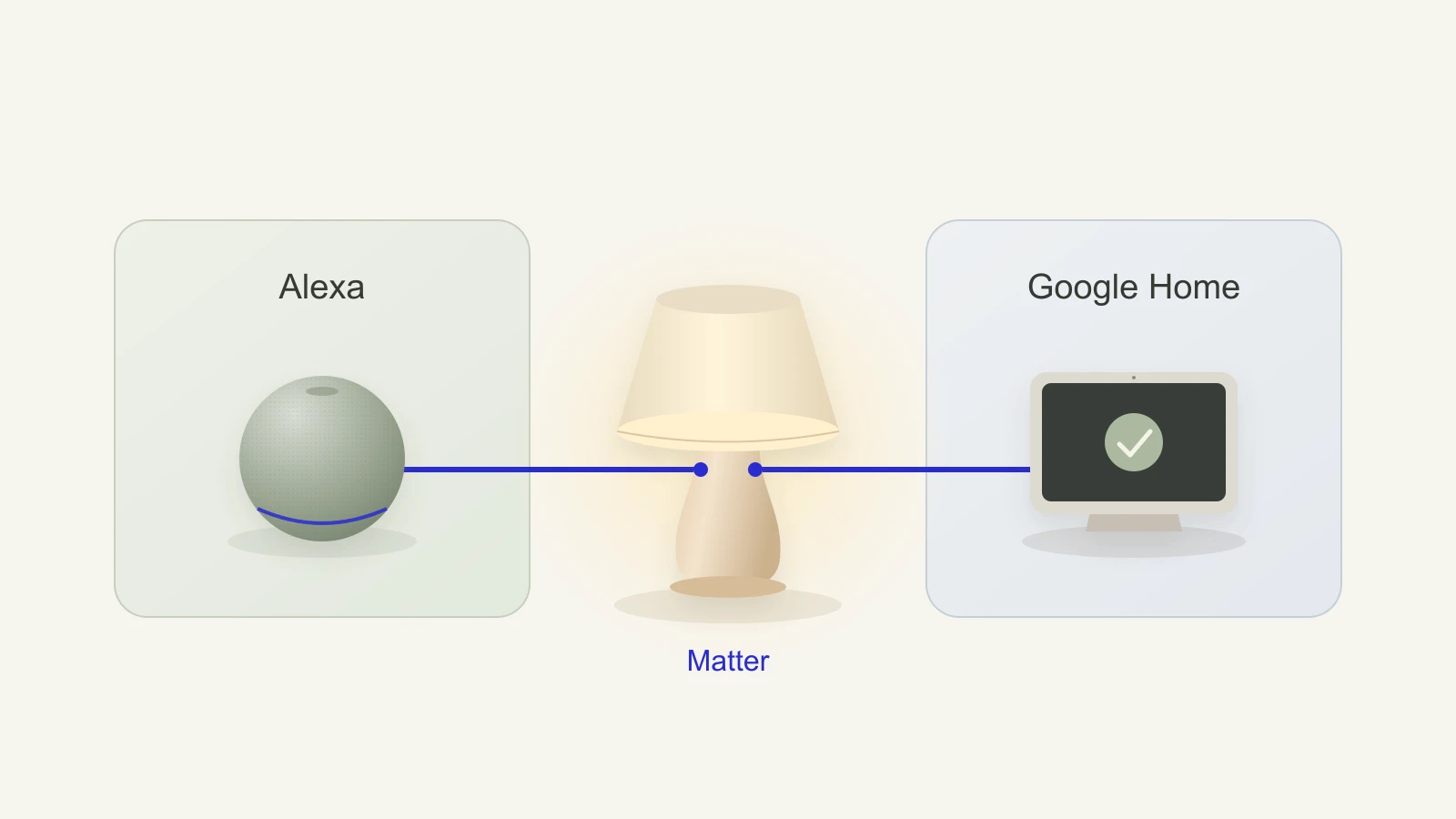
What Matter changes if you own devices from different brands
Automations stop dying at the border. A sensor from one brand can start a light from another with no intermediate steps and no external bridging services.
People in the same house no longer have to use the same phone. In a couple with one iPhone and one Android, that's the difference between arguing and not arguing.
The risk of getting stuck goes down. A device that speaks an open standard keeps working if you switch platforms. It lowers the price of a wrong decision made two years ago.
In the store, the question changes. From "does it work with my system" to "is it certified."
Matter, Thread and Zigbee: what's the difference
They sit on three different levels and get confused constantly.
Matter is the language. It defines what a device can say and what you can ask of it. It travels over three roads: Wi-Fi, Thread and Ethernet. All three stay inside your home network, so a Matter device keeps working even when your internet connection drops.
Thread is a low-power mesh radio network built for battery-powered devices. To talk to the rest of the house it needs a border router, a role now played by many speakers, displays and hubs. Version 1.4, published by the Thread Group in autumn 2024, fixed the most annoying flaw: border routers that each spun up a parallel network, the most common reason devices vanish at random.
Zigbee is an older protocol, also from the Connectivity Standards Alliance, still widely installed. It isn't IP-based, so it needs its own hub and reaches Matter platforms through a bridge. Hubs like Philips Hue, Aqara M3 and IKEA Dirigera do exactly that. It's why a house full of Zigbee doesn't need throwing out.
How many devices support Matter today
The number changes every month. The only place it's genuinely current is the Connectivity Standards Alliance database of certified products. Anyone publishing a fixed figure is copying it from an old press release.
What doesn't go stale is the trajectory. Matter was published in October 2022. Version 1.3, in May 2024, opened it up to appliances. Version 1.5, ratified at the end of 2025, added cameras. Version 1.6, on June 17, 2026, introduced NFC commissioning: a bulb can be paired before you even screw it in.
All four major home platforms support it. On the open-source side, Home Assistant was the first project to receive official Matter certification.
One thing to check in the store. The box should carry the Matter logo, not the words "Matter ready." The second means the manufacturer is working on it. Sometimes it means only that.
What Matter doesn't fix
Matter fixes interoperability and stops there.
It doesn't cover every device category. If a product does something the shared vocabulary doesn't anticipate, that function stays reachable only from the manufacturer's app.
It doesn't make platforms equal. Two ecosystems can support the same device and offer very different automation logic. The standard guarantees they understand each other, not that they can do the same things.
Most of all, it doesn't improve the triggers you already have. If your leaving-home automations fire late because they depend on phone location, they'll keep firing late with Matter. The standard moves messages better. It never touches the moment they're generated. We wrote about it in why leaving-home automations fire late.
Do you need Matter to automate leaving home
Matter is what connects the pieces. On its own it doesn't solve the moment you leave.
The bottleneck isn't communication between devices. It's that there's no reliable event saying "this person is leaving now." The available triggers measure locations, presence or doors that are already open, and each one arrives late or without identity. We compared the alternatives in physical triggers for your smart home.
Dory exists to generate that event and hand it to the home you already have. It recognizes two gestures, picking up your keys and putting them back, and it knows whose keys they are. Then it lets your automations do the rest. On the category, we wrote the guide to smart key trays.
Frequently Asked Questions
It depends on the devices. Some connect straight to your home network. Low-power ones need something to bridge them, a role now filled by many speakers, displays and home hubs already in circulation.
Yes. The major home platforms support the standard, and that's exactly why it exists. A certified device can be connected to more than one platform at the same time.
Some will, through a software update, if the manufacturer ships one. Others stay outside. They can only be reached through a hub that translates them into the standard.
Matter is the language devices speak. Thread is one of the networks that language travels over, alongside Wi-Fi and Ethernet, and it's built for battery-powered devices. A product can be Matter without using Thread.
The standard enables local control, so a device can work without going through an external service. What happens to your data still depends on the choices of the manufacturer and the platform you use.
Keep reading
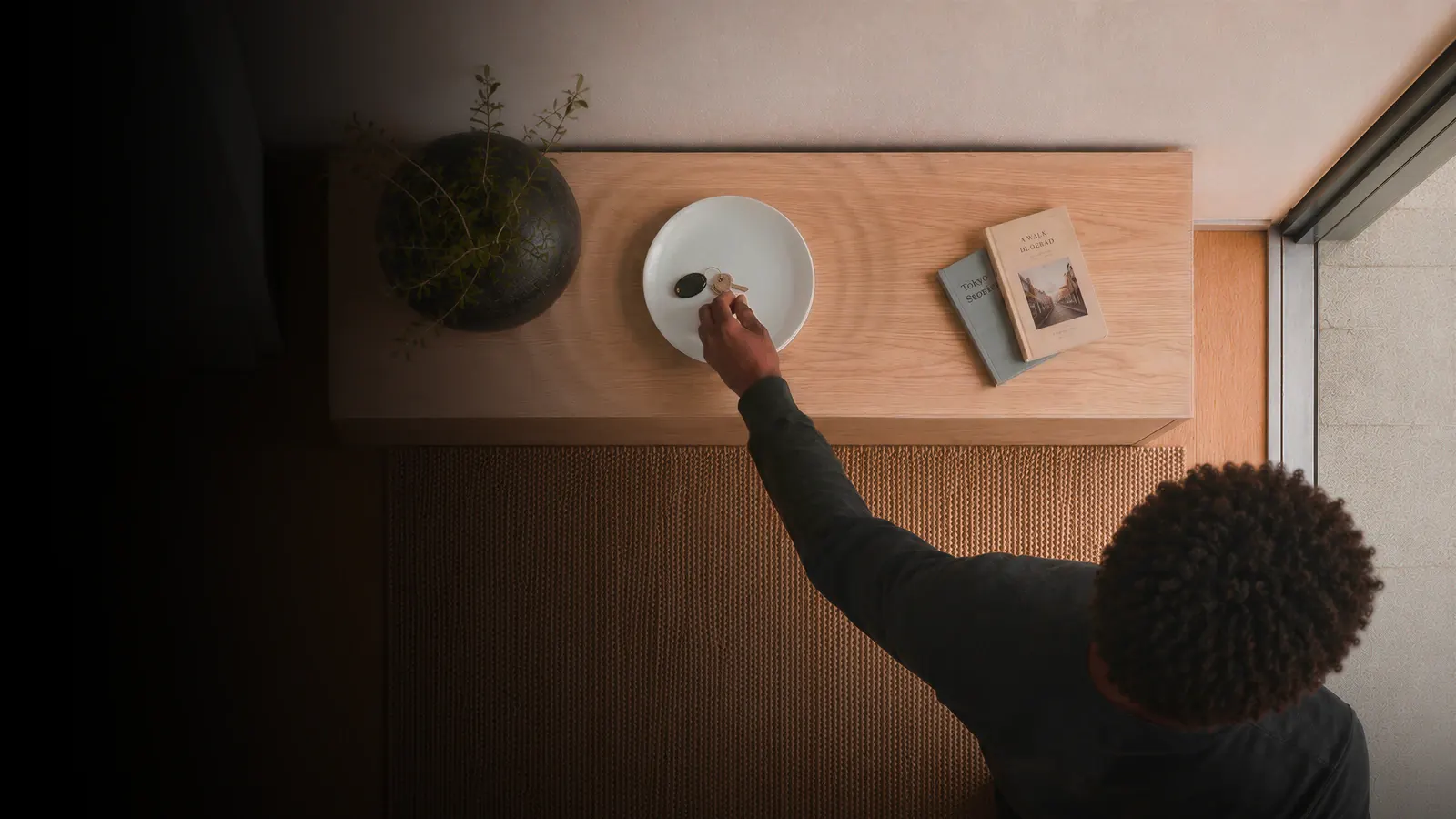 Smart homePhysical triggers for your smart home: what they are and when they helpA physical trigger is a device that starts an automation from something happening in the real world, rather than from a phone's location or a clock. [...]Written by Federico Zarantonello
 Smart homeWhy leaving-home automations fire lateLeaving-home automations fire late because almost all of them rely on your phone's location, which gets sampled at intervals across a radius of at [...]Written by Federico Zarantonello
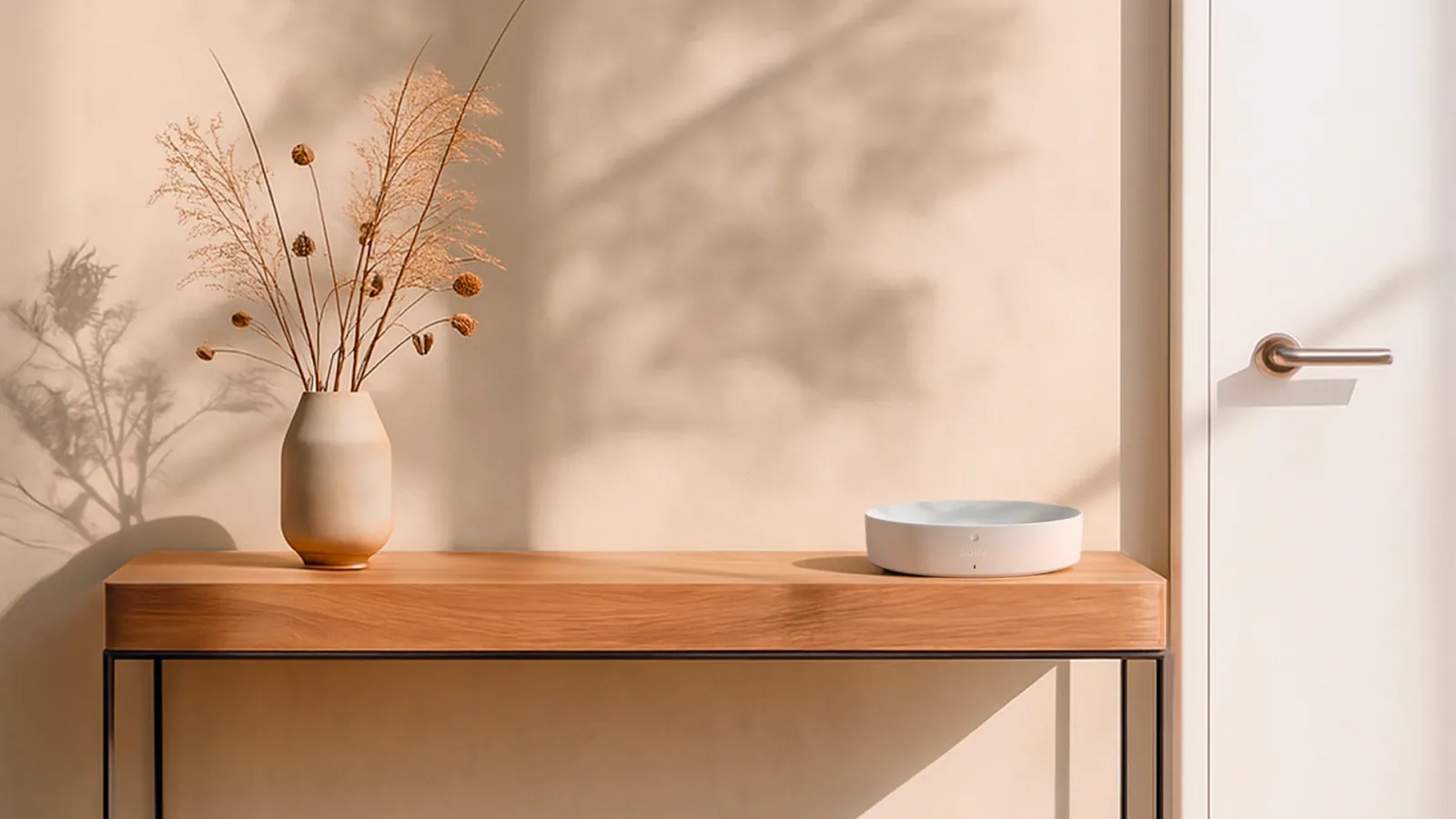 EntrywaySmart key tray: what it is and how it worksA smart key tray is an entryway tray that notices when you pick up or put down your keys and uses that moment to remind you of something. From the [...]
 Written by Thomas David Short